
For the decline of any civilization, there are many artifacts which contribute to that decline, but as we look back, it becomes easier to discern what the most significant artifacts were. For ancient Rome, the artifacts which contributed the most to the decline of ancient Rome were political instability, relying on slaves for labour, and invasions from enemy tribes. While there are other artifacts which also contributed to the decline of Roman civilization, political instability, relying on slaves for labour, and invasions from enemy tribes demonstrate the biggest impact.

Political stability is a necessary component of any civilization if it intends to prosper, as political leaders give a civilization a sense of direction, unity, and are essential for ensuring military operations can be run effectively. While Rome’s political system did not start out as unstable, we start to see the slow decline after Rome was changed from a republic into an empire, with Augustus, the first emperor of Rome, creating the praetorian guard.[1] Augustus designed the praetorian guard to act as personal bodyguards for the Emperor, as well as the royal family, but their position as bodyguards became more controversial, as they acted out a number of assassinations on those Roman emperors they vowed to protect.[2] While there were instances that the praetorian guard created good short-term effects by killing off an emperor, but the lasting long-term affects caused by the constant political chaos was an ultimate detriment to the Roman Empire.[3] The praetorian guards slow change from loyal servants to buyable mercenaries showed a negative change in the leadership of Rome with the position of emperor degrading to whoever had enough money to purchase the position, causing the common people to lose more and more trust in their government.[4] While the Emperors themselves alongside other factors contributed to the decline of Rome, the praetorian guard promoted corruption, betrayal and chaos to be an expected aspect of the Roman Empire, ultimately leading to its decline.[5]

The social systems of a civilization are vital for its success and thus when a civilizations social system is disrupted or altered, most often results in the subsequent civilizations decline. In ancient Rome, slaves were essential for agricultural aspects, as plantations run by slaves provided the cheapest labour costs and with an exponentially growing population, resources needed to be produced in mass quantities.[6] While slave-run plantations were a solution to a short-term problem of agricultural resources, it ultimately led to disruption of the social system, as slave labour replaced work for the average Roman citizen.[7] While agricultural work used to be done the roman populace, as more conquests brought back more and more slaves, they slowly took over the market, causing agricultural business to be controlled by the social elite, instead of the lower class.[8] The slow rise of unemployment due to slave-run plantations taking over the agricultural industry caused a significant rift between the social classes, even causing mobs to be created by angry unemployed citizens.[9] Slavery slowly took over almost every other market that had previously been held by the lower class, which although could be seen as a positive change for the higher class citizens, due to cheaper labour, but for the lower class, they had no other choice but to rely on the government for support.[10] Because of the slow take over of slave labour, the lower class started straining on the Roman economy, as well as creating violent mobs, which also strained on the government, ultimately causing slave labour to be one of the reasons ancient Rome’s civilization declined.[11]
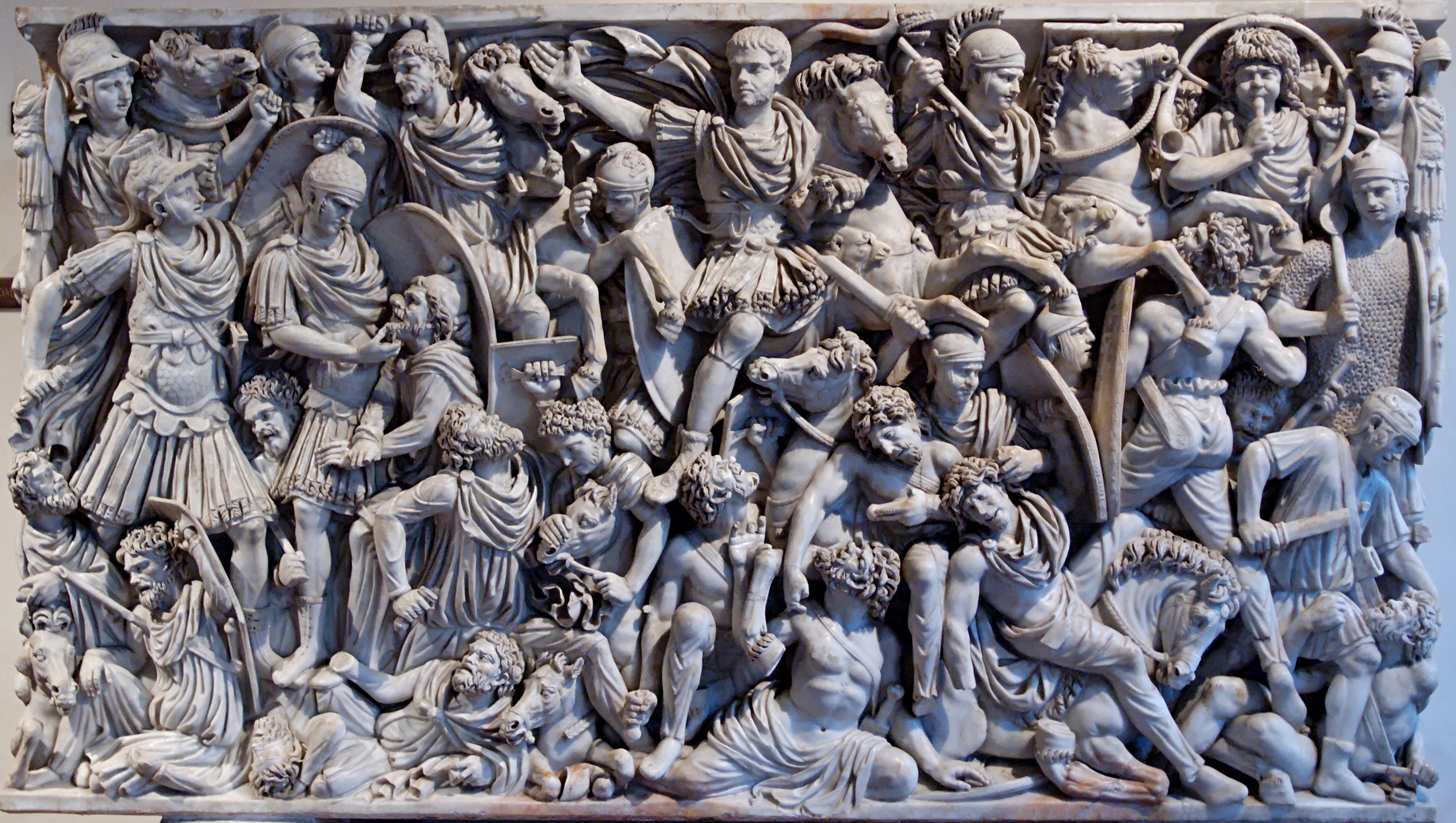
Invasion by enemy tribes in ancient Rome was an issue that was constant and continuously dealt with through the civilization’s history, but as other factors such as poor economy and an unstable government weighed on ancient Rome, it later became a factor for the decline of the civilization.[12] Rome suffered the same problem with the Roman army that they did with slavery, most of the Roman army was compiled of immigrant soldiers whose homeland was taken over by Roman conquest.[13] There were often even generals who would be considered barbarians, or at the very least not true Romans, which not only caused many civil wars through war generals declaring themselves to be emperors, but also caused allies to barbarian forces to be put directly into the Roman army.[14] This caused a large problem for the Roman government, as they were not only fighting barbarian tribes which were invading, as they had been for hundreds of years, but they were now also facing new threats of civil war.[15] While this situation of continuous external and internal war was something that Rome had inevitably caused itself, it was a slow progression through hundreds of years of conquest and migration, which led up to an ultimate turning point for the civilization.[16] This turning point was when Western Rome was conquered during a revolt by the barbarian Odoacer in 476 C.E., with the emperor at the time, Romulus Augustulus being deposed.[17] Although the Eastern Roman Empire did continue until the 15th century, many regard the conquering of the Western Roman Empire as when the Roman empire fell, as the Eastern Empire developed a new identity as the Byzantine Empire.[18]
Ancient
Rome was one of many great civilizations that left lasting impacts on society
and although it was a successful civilization for many hundreds of years, it ultimately
declined. The decline of any civilization will have multiple causes, and the decline
of Roman civilization is no exception, with the greatest causes for its decline
still being debated by historians to this day, as well as entirely new theories
being presented. While there are many factors to account for when in regards to
the decline of Roman civilization, political instability, relying on slaves for
labour, and invasions from enemy tribes are the artifacts that ultimately
caused the most impact and eventually led to its decline.
[1] “The Praetorian Guard,” last modified October 29, 2018, https://warfarehistorynetwork.com/daily/military-history/the-praetorian-guard/
[2] “The Praetorian Guard.”
[3] Adam Renner, “What Impact did the Praetorian Guard have on the Political Climate of the Roman Empire?” (M.A. diss., Newcastle University, 2011)
[4] Adam Renner, “What Impact did the Praetorian Guard have on the Political Climate of the Roman Empire?” (M.A. diss., Newcastle University, 2011)
[5] Adam Renner, “What Impact did the Praetorian.”
[6] “Ancient Roman Slavery,” accessed May 20, 2019, https://www.unrv.com/slavery.php
[7] “Ancient Roman Slavery.”
[8] “Ancient Roman Slavery.”
[9] “Ancient Roman Slavery.”
[10] Henry Hazlitt, “Poor Relief in Ancient Rome,” The New York Tribune, June 20, 1931, accessed May 20, 2019, https://fee.org/articles/poor-relief-in-ancient-rome/
[11] Henry Hazlitt, “Poor Relief.”
[12] “Why Did Ancient Rome Fall?,” accessed May 20, 2019, https://www.history.co.uk/shows/barbarians-rising/articles/why-did-ancient-rome-fall
[13] “Military aspects in the fall of the Roman Empire,” accessed on May 20, 2019, https://mariamilani.com/ancient_rome/military-aspects-in-the-fall-of-the-roman-empire.htm
[14] “Military aspects.”
[15] “Military aspects.”
[16] “Military aspects.”
[17] “Divorce and Decline: The Division of the East and West Roman Empires,” last modified July 30, 2018, https://www.historyhit.com/divorce-and-decline-the-division-of-east-and-west-roman-empires/
[18] “Divorce and Decline.”
Bibliography
Andrews, Evan. 2018. 8 Things You May Not Know About the Praetorian Guard. August 29. Accessed May 20, 2019. https://www.history.com/news/8-things-you-may-not-know-about-the-praetorian-guard.
Blumberg, Arnold. 2018. The Praetorian Guard. October 29. Accessed May 18, 2019. https://warfarehistorynetwork.com/daily/military-history/the-praetorian-guard/.
Bradley, Keith. 2018. A Bitter Chain: Reflections on Slavery in Ancient Rome. September 1. Accessed May 20, 2019. https://brewminate.com/a-bitter-chain-reflections-on-slavery-in-ancient-rome/.
Hazlitt, Henry. “Poor Relief in Ancient Rome.” The New York Tribune, June 20, 1931. Accessed May 20, 2019. https://fee.org/articles/poor-relief-in-ancient-rome/.
History. n.d. Why Did Ancient Rome Fall. Accessed May 17, 2019. https://www.history.co.uk/shows/barbarians-rising/articles/why-did-ancient-rome-fall.
Korostyshevskiy, Vladimir. 2015. Shutterstock. July 30. Accessed May 20, 2019. https://www.shutterstock.com/image-photo/rome-italy-july-30-2015-ancient-323275574.
Maria Milani. n.d. Military aspects in the fall of the Roman Empire. Accessed May 20, 2019. https://mariamilani.com/ancient_rome/military-aspects-in-the-fall-of-the-roman-empire.htm.
Renner, Adam.”What Impact did the Praetorian Guard have on the Political Climate of the Roman Empire.” M.A. diss., Newcastle University, 2011.
Ricketts, Colin. 2018. Divorce and Decline: The Division of East and West Roman Empires. July 30. Accessed May 20, 2019. https://www.historyhit.com/divorce-and-decline-the-division-of-east-and-west-roman-empires/.
UNVR. n.d. Ancient Roman Slavery. Accessed May 20, 2019. https://www.unrv.com/slavery.php.

 Sarah's Ancient Rome Blog