
Ancient Rome was a civilization that impacted the world significantly in its own era through its large military excursions, as well as the cultural influence it had on the regions surrounding it, and has had lasting impacts on modern civilizations as well, even after it’s decline. While all modern civilizations are generally built on the remnants of ancient civilizations in at least some ways, ancient Rome left a significant impact on North American culture specifically that is distinguishable from other civilizations of the same time period. While there are many artifacts that ancient Rome left behind, the most significant artifacts that leave a lasting legacy can be narrowed down to architecture, government, and law.
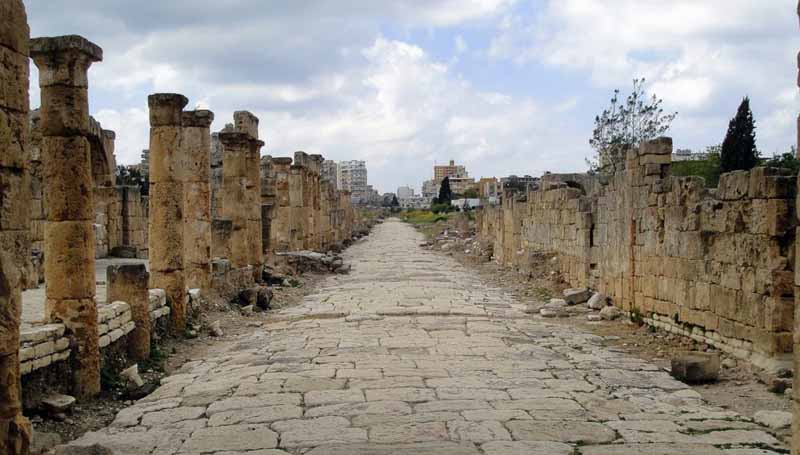
Architecture demonstrates the cultural and artistic values of a civilization and much of what we know of roman culture comes from their lasting architecture, but besides cultural importance, architecture holds practical importance as well.[1] The architectural feats of ancient Rome were significant in their own time to the people of Rome, as well as neighboring regions, due to the extraordinary number of bridges and roads engineered.[2] Roman engineering led to invention of concrete, which enabled the construction of roads and bridges to an extent that had not been previously seen in ancient civilization.[3] The roads and bridges across the vast empire of Rome demonstrated Rome’s power, enabled Rome’s military expeditions, benefited the economy through trade-routes, and created a higher standard for travel.[4] Where there were once impassable rivers and rough terrain, there were now sophisticated, well-made bridges and concrete roads, which helped to convey a commanding presence to, not only Roman citizens, but surrounding regions.[5] Roads and bridges were crucial to military expeditions, as supply routes and reduced travel time made it easier for Rome to out-maneuver their enemies, as well as the ability to swiftly respond to any threats.[6] While the Roman military benefited from the roads and bridges constructed, they were also a benefit to the economy, enabling trade routes not only between cities, but regions.[7] Military and economic benefits were largely important in the creation of the Roman Empire, but the social benefits from accessible roads and bridges have lasted well beyond ancient Rome.[8] Roadside inns, road signs and rest stops all originated in Rome in order to help travellers with their journeys and have since been innovated to be a standard in modern society.[9] Roads became a necessity that have lasted till modern day, due to the standard that ancient Rome set for travel as well as their demonstration of military and economic benefits.[10] While ancient Rome saw numerous benefits due to their architectural innovations, the roads and bridges of ancient Rome have left the longest legacy, as the impact has lasted till modern day.[11]
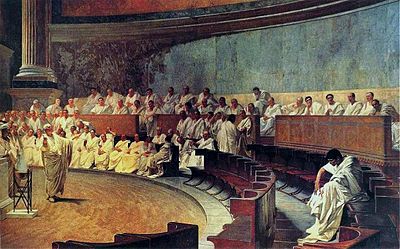
Every civilization that has thrived has used some form of government, whether it be theocracy, monarchism, democracy, etc., and ancient Rome not only thrived with their form of government, but left a lasting legacy on governments to this day.[12] The specific change ancient Rome had on governmental procedures was the introduction of governmental branches, specifically the roles of the consuls, magistrates, tribunes, and the senate.[13] Rome was not the first democracy, and what we define as democracy has largely changed since ancient Rome, but Rome was the first civilization that incorporated different branches of government into their democratic model.[14] This model which incorporated multiple branches of government benefited the people of Rome as there was a distribution of power, which allowed for debate on sensitive issues which if not under the same model would have had little to no discussion at all.[15] This model was significant to not only the patricians of Rome, but the plebeians as well, as they too were allowed to vote on who would be elected for consuls, tribunes, and magistrates.[16] While the distribution of power in governmental branches is significant alone, the manner in which the were distributed is also significant, in that there were consuls, magistrates, tribunes, and the senate, each with varying levels of power and control.[17] The consuls consisted of two elected officials who acted as governors of Rome and were required to both agree on all decisions; as to not give sole power to any person for too long a time, one could only be a consul for one year every ten years.[18] Magistrates were elected officials as well and were in charge of keeping law and order, as well as managing the financial aspects of Rome.[19] Tribunes were also elected officials who acted as a sort of union for the people of Rome, as it was their responsibility to make sure the people of Rome were treated fairly.[20] While members of the senate were not elected, consisting mainly of retired magistrates, they held no actual power over governmental affairs and acted only as advisors to the two consuls, although their advice was taken very seriously.[21] While this model of distribution of power was not perfect, it allowed a safeguard against any one individual gaining complete control over all governmental decisions, and was effective enough that we modeled modern governments after it.[22] Modern democratic governments all operate with some sort of division of power through governmental branches, which under normal circumstances do not allow for one individual to have complete control over all governmental operations, similar to the Roman government.[23] While there are many differences between modern governments and that of ancient Rome, the innovations on government ancient Rome had were enough to last more than 1,000 years and impact how modern civilizations form their own governments, making it one of the greatest legacies of ancient Rome.

Laws are an essential part of modern civilization and have been apart of almost every significant civilization that has existed to some extent.[24] Law is important to society as it restricts certain harmful behaviours, acts as a guideline for how to act in a manner which is acceptable to society, and is a medium in which social reform in a given civilization can be enacted.[25] While ancient Rome not only utilized the use of law in creating a lasting civilization, they also invented new legislative procedures and concepts which were substantial enough to their own civilization that some are still used today.[26] Some of those most substantial legislative procedures and concepts created by ancient Rome that are still used today include preliminary hearings, appeals, and trial by jury.[27] Preliminary hearings are a procedure in which after a criminal complaint has been made by the prosecutor, it is determined whether or not there is enough evidence to warrant a trial.[28] Preliminary hearings are essential in managing the influx of cases which would be a burden to the judicial system, as well as providing a benefit to the parties involved with the case, in that the nature of the case is better understood if it were to go to trial.[29] An appeal is another important legal concept which was created in ancient Rome and is the right to appeal to a higher court when you have lost to a lower court, believing it to be due to an error of the lower court.[30] This legal concept allows not only for corrections to be made by higher authorities, but gives parties a chance to demonstrate their case a second time if they feel the court had made mistakes which affected the outcome.[31] The right to a trial by jury is an essential part of many humanitarian principles and is widely considered to be the best method of democratic administration of justice.[32] A trial by jury is a trial in which the final verdict is made by a jury of various citizens, rather than by a lone judge, which encourages community participation, reduces the chance of a singular individual’s bias affecting the outcome of the trial, and allows for better representation of community values.[33] The affect ancient Rome has had with the creation of their legislative concepts and procedures, such as preliminary hearings, appeals, and trial by jury not only impacted the lives of Romans of the time, by giving them more rights and freedoms, but impacts modern civilizations as well.[34] While ancient Romans had better lives due to the inclusiveness and fairness of Roman law, but it also has affected modern lives by instilling values about human rights regarding legislation that we still hold today, which is why it is one of the lasting legacies of Rome.[35]
All modern civilizations take
aspects from ancient civilizations that they then use to build their own unique
civilizations, but the impact ancient Rome had was not only substantial but
fundamental in the creation of many modern civilizations. While there are many
aspects of modern life which would simply not exist without the innovations or
inventions of the ancient Romans, we can narrow down what artifacts left the greatest
legacy by examining how much they affected the people of time, as well as how they
still affect us today. The legacies of Rome are numerous and which legacies are
the most substantial is debated and will continue to be debated as long as we
strive to learn more about our own civilization and ancient civilizations, but given
the evidence available at present, the artifacts which have been shown to have
left the largest legacies are architecture, government, and law.
[1] Colin Szasz, “The Influence of Roman Engineering and Architecture” (McGill University, 2001)
[2] Szasz, “The Influence.”
[3] Szasz, “The Influence.”
[4] “8 Ways Roads Helped Rome Rule the Ancient World,” last modified August 29, 2018, https://www.history.com/news/8-ways-roads-helped-rome-rule-the-ancient-world
[5] Szasz, “The Influence.”
[6] “8 Ways.”
[7] “8 Ways.”
[8] “8 Ways.”
[9] “8 Ways.”
[10] “The Influence of Roman Engineering on the Contemporary World,” last modified June 20, 2012, https://www.acorn-ind.co.uk/insight/The-Influence-of-Roman-Engineering-on-the-Contemporary-World/
[11]“The Influence of Roman.”
[12] “What was Ancient Rome’s Influence on Government and Democracy Today,” accessed May 31, 2019, https://www.ancientfacts.net/ancient-romes-influence-government-democracy-today/?view=all
[13] “The Romans – Roman Government,” accessed June 17, 2019, https://www.historyonthenet.com/the-romans-roman-government
[14] “The Romans.”
[15] “The Romans.”
[16] “The Romans.”
[17] “The Romans.”
[18] “The Romans.”
[19] “The Romans.”
[20] “The Romans.”
[21] “The Romans.”
[22] “Roman Government,” last modified November 29, 2015, https://www.ancient.eu/Roman_Government/
[23] “Roman Government.”
[24] “Importance of Law in Society,” last modified November 8, 2018, https://legaldesire.com/article-importance-of-law-in-society/
[25] “Importance of Law.”
[26] “What are the Lasting Legacies of the Roman Empire on Modern Governments?,” last modified January 4, 2018, https://dailyhistory.org/What_are_the_Lasting_Legacies_of_the_Roman_Empire_on_Modern_Governments%3F#cite_note-10
[27] “What are the Lasting Legacies.”
[28] “Preliminary Hearings and Serious Criminal Cases,” accessed on June 17, 2019, https://robichaudlaw.ca/ontario-criminal-court-procedures/preliminary-hearings-criminal/
[29] “Preliminary Hearings.”
[30] “The Appeal Process,” accessed on June 17, 2019, http://bryanappeals.com/resources/the-appeal-process
[31] “The Appeal Process.”
[32] “The Role of the Public,” last modified October 16, 2017, https://www.justice.gc.ca/eng/csj-sjc/just/12.html
[33] “The Role of the Public.”
[34] “What are the Lasting Legacies.”
[35] “What are the Lasting Legacies.”
Bibliography
Acorn. 2012. The Influence of Roman Engineering on the Contemporary World. June 20. Accessed May 30, 2019. https://www.acorn-ind.co.uk/insight/The-Influence-of-Roman-Engineering-on-the-Contemporary-World/.
Ancient Facts. n.d. What was Ancient Rome’s Influence on Government and Democracy Today. Accessed May 31, 2019. https://www.ancientfacts.net/ancient-romes-influence-government-democracy-today/.
Andrews, Evan. 2018. 8 Ways Roads Helped Rome Rule the Ancient World. August 29. Accessed May 30, 2019. https://www.history.com/news/8-ways-roads-helped-rome-rule-the-ancient-world.
Bryan, Bruce. n.d. The Appeal Process . Accessed June 17, 2019. http://bryanappeals.com/resources/the-appeal-process.
Crystalinks. n.d. Roads in Ancient Rome. Accessed June 18, 2019. https://www.crystalinks.com/romeroads.html.
Daily History. 2018. What are the Lasting Legacies of the Roman Empire on Modern Governments? January 4. Accessed June 17, 2019. https://dailyhistory.org/What_are_the_Lasting_Legacies_of_the_Roman_Empire_on_Modern_Governments%3F#cite_note-10.
Department of Justice. 2017. The Role of the Public. October 16. Accessed June 17, 2019. https://www.justice.gc.ca/eng/csj-sjc/just/12.html.
Rank, Scott. n.d. The Romans – Roman Government. Accessed June 17, 2019. https://www.historyonthenet.com/the-romans-roman-government.
Robichaud’s Criminal Defence Litigation. n.d. Preliminary Hearings and Serious Criminal Cases. Accessed June 17, 2019. https://robichaudlaw.ca/ontario-criminal-court-procedures/preliminary-hearings-criminal/.
S.B. 2013. What is the difference between common and civil law? July 17. Accessed June 18, 2019. https://www.economist.com/the-economist-explains/2013/07/16/what-is-the-difference-between-common-and-civil-law.
Szasz, Colin. 2001. “The Influence of Roman Engineering and Architecture .”
Tiwari, Kishan. 2018. Importance of Law in Society. November 8. Accessed June 17, 2019. https://legaldesire.com/article-importance-of-law-in-society/.
Wasson, Donald. 2015. Roman Government. November 29. Accessed June 17, 2019. https://www.ancient.eu/Roman_Government/.




 Sarah's Ancient Rome Blog