
By Sarah Young
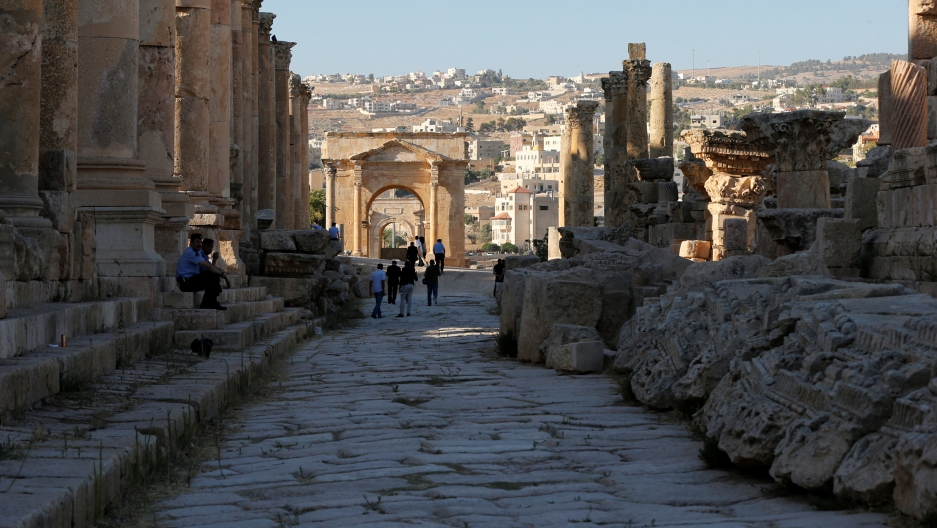
Concrete is a huge part of modern infrastructure and many architectural feats would simply not exist without it, but even if architectural wonders were not accounted for, concrete is important in that it allows for a way to quickly build reliable infrastructure. This ability to quickly build reliable infrastructure was a large aspect of why Rome flourished as a civilization, some of these infrastructures including roads which acted as trade routes for Rome, boosting their economy.[1] Besides the economical advancement that concrete gave Rome, the ability to give the population housing and cultural buildings that were reliable in all forms of weather, was what made concrete such a historically significant artifact to the development of Rome.[2]

While Concrete helped Rome create the infrastructure needed to house a large population, the aqueduct systems helped to sustain that population by providing easily accessible clean water.[3] Aqueducts systems consisted mostly of underground tunnels or above-ground arcades, these systems would transport water from springs or lakes to a large tank in the city, called a castellum.[4] Water would then be diverged from the castellum to the wider population through public fountains, drinking basins, or public baths.[5] Water is necessary for human life and even unclean water can cause a large detriment to one’s health; the aqueduct systems present in Rome, not only provided a large quantity of water, but also provided water of a reputable quality, which is why it is one of the most historically significant artifacts to the development of ancient Rome.[6]

The acta diurna gave the Civilization of Rome an essential addition to their culture, a way in which the populace could be updated on social and political news through public notices written on stone, later being written in papyri.[7] The acta diurna created a way in which important political or social information could be quickly relayed to a large portion of the population, which resulted in sense of community between the people, as well as a means in which to communicate with each other on a larger level.[8] While communication in and between ancient civilizations used to only consist of word of mouth, depending greatly on meeting people at the right time, the acta diurna gave Rome an important advantage in that everyone in Rome were on somewhat of the same level of knowledge on the relevant topics of time.[9] This advantage in communication was a large social benefit to the Roman civilization, which is why it is one of their most historically significant artifacts.
[1] “Roman Concrete: The Volcanic Material That Erected the Roman Empire,” accessed May 12, 2019, https://www.historicmysteries.com/roman-concrete/.
[2] “Roman Concrete.”
[3] “Watering Ancient Rome,” last modified February 22, 2000, https://www.pbs.org/wgbh/nova/article/roman-aqueducts/
[4] “Watering Ancient Rome.”
[5] “Watering Ancient Rome.”
[6] “Watering Ancient Rome.”
[7] “Acta Diurna: The Telegraph of Ancient Rome, Bringing You All the Latest Gladiator Combat News,” last modified December 23, 2017, https://www.ancient-origins.net/artifacts-ancient-writings/acta-diurna-telegraph-ancient-rome-bringing-you-all-latest-gladiator-021770
[8] “Acta Diurna.”
[9] “Acta Diurna.”
Bibliography
Aicher, Peter. 2000. Watering Ancient Rome. February 22. Accessed May 13, 2019. https://www.pbs.org/wgbh/nova/article/roman-aqueducts/.
Franz, Julia. 2017. Seawater in the pores? It’s what made Roman concrete great. July 25. Accessed May 13, 2019. https://www.pri.org/stories/2017-07-25/seawater-pores-it-s-what-made-roman-concrete-great.
Harper, Jim. n.d. Roman Concrete: The Volcanic Material That Erected the Roman Empire. Accessed May 12, 2019. https://www.historicmysteries.com/roman-concrete/.
Mingren, Wu. 2017. Acta Diurna: The Telegraph of Ancient Rome, Bringing You All the Latest Gladiator Combat News. December 23. Accessed May 11, 2019. https://www.ancient-origins.net/artifacts-ancient-writings/acta-diurna-telegraph-ancient-rome-bringing-you-all-latest-gladiator-021770.
National Geographic Society. 2018. Roman Aqueducts. Sarah Appleton. July 6. Accessed May 9, 2019. https://www.nationalgeographic.org/encyclopedia/roman-aqueducts/.

 Sarah's Ancient Rome Blog